Categories
Blog

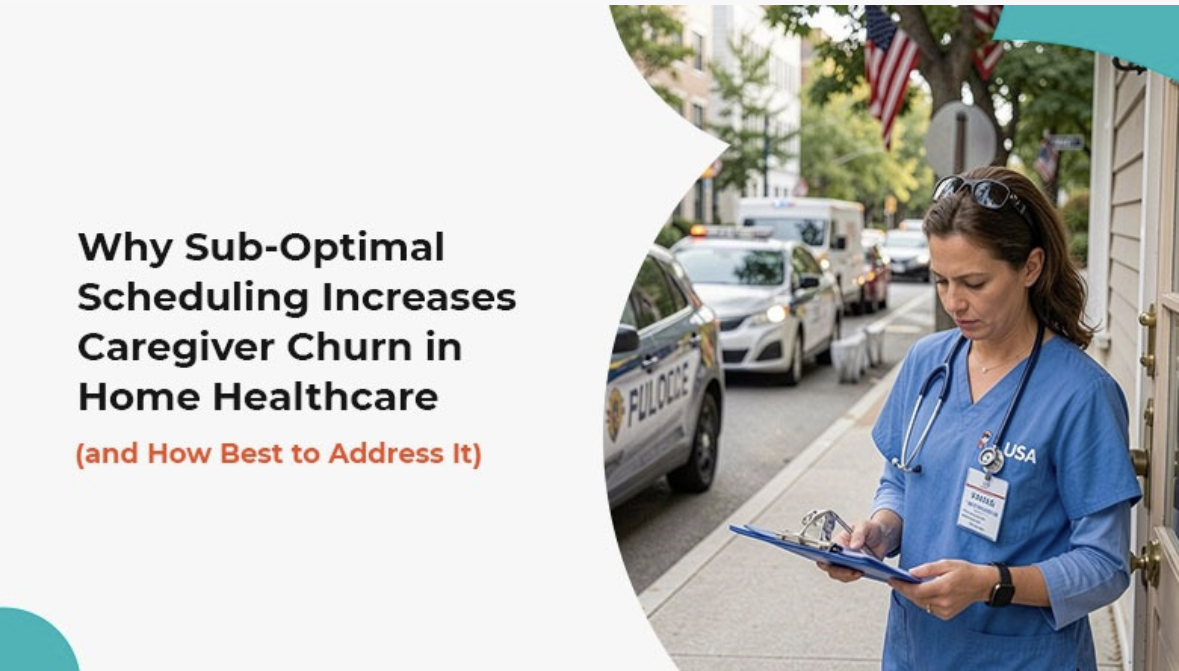
Why Sub-Optimal Scheduling Increases Caregiver Churn in Home Healthcare (and How Best to Address It)

Caregiver churn has become one of the biggest challenges in home healthcare as agencies are increasingly unable to keep up with the demand of skilled medical workforce while maintaining quality care for patients. A major contributing factor is poor scheduling. When caregivers face burnout due to demanding shifts and unfair work schedules, that eventually translates into high turnover.

It’s not just about filling shifts – workforce stability and caregiver retention is key. This is where CareHudl, a GigFlex product designed specifically for the home healthcare market comes to the rescue. CareHudl provides industry-unique scheduling software designed to improve caregiver utilization, performance and retention.

Caregiver churn and poor scheduling costs

Caregiver churn is the process where caregivers leave the medical agencies at the same rate as new hires. This repetitive process cycle creates challenges for health agencies like high recruitment costs, lapses in quality patient care and pause in the healthcare operations. The patients are affected as well, as the continuity in healthcare is disrupted and results in reduced  trust in the system.

One of the biggest factors which leads to caregiver churn in home healthcare is the lack of proper scheduling. Retention decreases when the caregivers are exposed to unfair workloads and shifts which results in burnout. Poor scheduling can increase hidden costs like recruitment and training, high turnover rates and revenue loss for the agencies. 

Patient Care Challenges

Caregiver churn not only affects the caregivers, but it also impacts the patients. When under stress due to unscheduled working hours, caregivers often tend to not deliver as high quality service, which leads to a decline in patient satisfaction. The consequences of caregiver churn in home healthcare are equally bad. Patients lose familiarity and stability when their caregiver leaves.

How sub-optimal scheduling shows up?

Sub-optimal scheduling can cause issues for caregivers, agencies and patients. Common contributors to sub-optimal scheduling include:

  • Overbooking of shifts
  • Unpredictable changes in schedule
  •  No rest hours
  • Long commute times between appointments

Caregivers want fairness in their assignments. Lack of perceived fairness can create an unstable workforce which makes caregiver retention even harder for medical agencies.

When the work patterns seem unfair, caregivers lose morale which declines the patient care quality. CareHudl is that application which addresses these challenges and provides an optimal scheduling software which relies on fairness, flexibility and transparency.

Core issues in scheduling gaps

A root cause of caregiver churn is scheduling gaps in their daily schedules. It is because the health agencies today still rely on the outdated software or prefer manual punching which makes it difficult to manage and look over shifts to ensure optimized appointment routes. Lack of communication between caregivers and management also adds to the worries. Without a reliable data and predictive planning algorithm, agencies will be unable to manage workloads of caregivers.

These core issues create stress for all, low morale for caregivers and lead to caregiver churn in the home healthcare field.

When caregivers feel unsupported, morale drops and turnover increases. CareHudl app helps agencies overcome these challenges by replacing manual processes with AI-enhanced Geo-Intelligent Scheduling® software. With fairness, transparency and data-driven planning, CareHudl reduces churn and strengthens caregiver retention.

Is smarter scheduling and transparency the ultimate solution?

The whole solution lies over the fact of smarter scheduling. It is that key which can help in the reduction of caregiver churn and build a reliable workforce in healthcare. Smart scheduling can be achieved by using technology, i.e. get reliable data, use automation and predictive analysis. It can increase flexible scheduling hours for caregivers, which can further allow them to honor their personal commitments.

Transparency in the caregiver policies is also equally important. Caregivers require clear information on the assignment of shifts. This is where the advanced scheduling software would require real-time updates.

GigFlex’s CareHudl App: Eradicating Caregiver Churn

CareHudl application by GigFlex is the solution on which medical agencies can rely. This app is designed in such a way to transform the healthcare schedule. It automates the real time data and optimizes by using smart scheduling software to ensure fairness, flexibility, and transparency in generating shift schedules for caregivers. The real-time update provides transparency and removes sub-optimal scheduling which increases the trust. Predictive tools balance the workloads which leads to reduced stress and caregiver burnout.

Those who have used CareHudl have reported low caregiver churn and strong caregiver-patient bond. It’s a win-win for both, as with flexible options caregivers feel valued and increases their morale which results in improved patient treatments. The long-term benefits include reduced costs and consistency in high quality home healthcare – all possible through CareHudl.

Conclusion

Effective home healthcare scheduling should be viewed as an effective caregiver retention program. Poor scheduling results in caregiver churn and decreased patient quality while transparency, flexibility and time management for caregivers results in better retention and a stronger bond of care between caregivers, patients and agencies. Agencies adopting CareHudl have gained long term benefits and improved healthcare workforce management. Better home healthcare means healthier teams and commitment of quality for the agencies.
Categories
Blog

Why CareHudl is an Innovative Leap for Home Healthcare Scheduling

Schedule Coordination is at the core of home healthcare. Care doesn’t happen in a single place. It cuts across houses, caregivers and changing patient requirements. At the heart of all this is scheduling which is something that has been historically regarded as a standard operations task as opposed to a mission-critical system.

In 2026, that difference in viewpoint is becoming a real issue. The manner in which scheduling is being managed has a direct impact on care delivery, staff efficiency, and patient experience, and can mean the difference between an “ok” agency and an outstanding one.

This is where Geo-Intelligent staffing solutions like CareHudl can make a real difference.

The Complexity Behind Home Healthcare Scheduling

Home healthcare is not about simply assigning shifts. It is about assigning the correct care giver to the correct patient, at the correct place, at the correct time.

Every scheduling decision is based on various factors. The availability of caregivers, matching caregiver skills to patient needs , travel distance, past patient experience.

These variables are hard to optimally manage when scheduling involves manual procedures, or tools that are not effectively interconnected. Sub-optimal tools and processes can create delays, mismatches, and require numerous adjustments that negatively affect staff effectiveness and patient satisfaction.

Why Traditional Scheduling Methods Fall Short

A large number of home healthcare providers continue to schedule caregivers using spreadsheets, calls and disjointed systems . This approach can work at a small scale but tends to break down when operations become larger.

Real time appointment status becomes more difficult to see. There is low visibility between teams. Exceptions become harder to manage.

This results in highly reactive operational processes . Rather than anticipating issues and proactively addressing them, teams end up spending the majority of their time fire-fighting problems after they occur.

This decreases caregiver utilization, and performance and increases the risk of missed visits or bad patient experiences.

A Shift from Manual to Intelligent Schedulin

CareHudl can transform the manner in which scheduling is done.

With CareHudl scheduling becomes dynamic. There is a faster and more accurate decision making process as multiple data points are taken into account and processed by an AI-enhanced system.

The matching of availability, location and skill is not done in isolation. It is performed system-wide ensuring optimal scheduling effectiveness .

This transforms scheduling into a sustainable differentiator for companies that embrace this kind of technology..

Improving Care Delivery Through Better Scheduling

Small delays in home healthcare scheduling can directly affect the quality of care.

Optimization of scheduling ensures that the caregivers arrive at the right time, patients are well taken care of and disruption is at a minimum.

CareHudl, A Gigflex product helps with this, minimizing scheduling gaps and enhancing patient needs and caregiver availability alignment.

This results in a more predictable and stable care environment that is essential for effective home healthcare.

Reducing Operational Pressure on Teams

Scheduling problems tend to put pressure on the whole organization.

Teams waste time in dealing with last minute changes and conflicts and communication gaps. This inhibits their capacity to concentrate on other tasks.

CareHudl is an solution that can alleviate this burden through greater visibility and easier coordination. Teams are able to view what is going on in real time and act with the assurance that their actions will optimally improve service delivery effectiveness.

This simplifies operations and scheduler stress.

Enabling Faster Response to Real-Time Changes

The home healthcare environment is erratic. Typical days involve cancellations, emergencies, and changes of schedules.

The difference between an average home health agency and a superior one is how they rise to meet these daily challenges..

CareHudl enables operations teams to make effective real-time scheduling adjustments, which in turn makes it much easier to cover gaps and ensure continuity of care. Changes are managed in an AI-enhanced system rather than manually by operations staff.

This enhances outcomes and reduces operations workload at the same time!!

Better Utilization of Caregivers

Balancing workload is one of the greatest problems of home healthcare.

Certain caregivers can be overworked and some underworked. This impacts on efficiency and employee satisfaction.

CareHudl assists in work distribution that takes into account the availability, location, and alignment of skills in one place. This will result in an enhanced workload balance and team performance.

This also helps in retention in the long run because it helps in curbing burnout.

Strengthening Patient Experience and Trust

Appointment timeliness compliance has direct effects on the patient experience.

Trust can be diminished by the late arrivals, missed appointments, and the perception of unreliable caregivers. Though the quality of care might be high, the perception of care may be not.

CareHudl enhances the accuracy and consistency of scheduling to build a more trustworthy patient experience.

This consistency creates a sense of trust that is necessary in long-term care relationships.

Why is it an Innovative Leap?

The value of CareHudl is not in efficiency gains only. It creates the opportunity for home care providers to take a whole new approach to scheduling.

Rather than dealing with schedules as a standalone task, it unites the data, coordination, and decision-making into a single system.

This minimizes reliance on manual operations and enhances general organization of operations.

This is not a minor change to home healthcare providers. It transforms team planning, response and care delivery.

The Direction Home Healthcare Is Moving Towards

With the increasing demand of home healthcare, there is more need to have improved systems.

Scheduling should no longer be viewed as just an operational layer. It should be embraced as a mission critical component in the process of effective care delivery and management.

Scheduling platforms such as CareHudl are leading the way by increasing the levels of geo-intelligence, responsiveness for home healthcare agencies

The outcome is improved caregiver utilization, performance and retention through a reliable and scalable system that dramatically improves scheduler effectiveness .

Closing Thought

Home healthcare relies on effective coordination.

Making better decisions in real time are what today’s operations teams really need and this is what CareHudl can deliver . It shifts the manual process of scheduling to a pro-active system that ensures improved care delivery.

It is what makes it an innovative leap.


Categories
Blog

Why Home Healthcare Agencies need Geo-Intelligent Scheduling

The service environment of the home healthcare agencies is one of the most logistically complicated. In contrast to facility-based care, services are provided in various homes, neighborhoods, and regions and at each location, the timing, travel are considered, and the needs of patients vary. It’s mandatory for Caregivers to be punctual, adhere to specific care schedules and continuity while dealing with uncontrollable factors like traffic, distance, and last minute schedule changes at the same time.

Traditional scheduling models in home healthcare are not designed to handle such complexity. Agencies that rely on manual planning or basic tools may face inefficiencies, sub-optimal scheduling, and caregiver burnout. To overcome these challenges, modern solutions like CareHudl, a GigFlex product, evolve employee scheduling into workforce management systems that incorporate geographic intelligence into the shift assignment process for better patient care delivery.

Geo-intelligent scheduling is increasingly becoming necessary to agencies that strive to offer dependable care that is patient-centered operationally efficient using modern healthcare staff scheduling software.

What Is Geo-Intelligent Scheduling in Home Healthcare?

Geo-intelligent scheduling refers to the use of location-aware technology to plan and optimize caregiver assignments based on proximity, travel time, and regional demand. Rather than just booking appointments based on clinician availability, agencies can match the allocation of resources (staff) with the reality of clinician and patient location through an advanced employee scheduling system.

This model turns the traditional shift scheduling software into a dynamic staff scheduling software for healthcare that takes distance, route dynamics and time-sensitive care delivery into consideration. Agencies save on unnecessary travel time by incorporating geographic information in scheduling processes and making sure that scheduled appointments occur on time and with the right caregiver. This change in approach enhances the utilization, productivity and satisfaction of home healthcare clinicians.

Addressing Travel Time and Caregiver Productivity

One of the biggest challenges in home healthcare is optimizing commuting time. If schedules are made without taking into account caregiver and patient location, caregivers will spend more time commuting between patients and less time actually providing care. 

Geo-Intelligent Scheduling software enables agencies to arrange the visits in a location-optimized manner. Assignments are made to minimize daily travelling distances so that caregivers can treat more patients on each shift. This utilization increase is like having more caregivers without additional cost..

Enhancing Continuity of Care Through Smarter Assignments

There is a significant continuity requirement in home healthcare. Patients need regular caregivers with whom they are acquainted with their medical conditions, routines and personal preferences. This continuity can be affected because of poor scheduling habits, which have adverse impacts on patient outcomes and satisfaction.

As an agency, it is possible to synchronize the caregiver placement not only based on skillset but also based on their past experience with that patient.  By initially assigning clinicians that are geographically close to patients, those patients will more often be attended to by those same clinicians in the future without sacrificing scheduling efficiency, which in turn strengthens patient familiarity, trust and satisfaction.

Improved caregiver-patient relationships in agencies can be maintained by integrating intelligence programs in employee schedule management software to enable these agencies to effectively manage large service territories.

Reducing Missed Visits and Scheduling Conflicts

Home healthcare is highly time-sensitive and missed or delayed visits can be extremely detrimental. When there are delays, it is hard to adjust the system through static scheduling and this results in disruption and delay across the whole day.

The geo-intelligent staffing scheduling software allows real-time access to the location of caregivers and their schedules. This enables proactive alerting of at risk appointments and empowers agencies to respond swiftly by reassigning appointments or notifying patients of changes to appointment start times.

Proactive exception management and communication helps improve patient satisfaction and retention.

Supporting Workforce Well-Being and Retention

The problem of staff burnout is rapidly becoming a problem in the medical sphere, and poor scheduling is one of the factors that fuel this problem. Unnecessary stress can be brought about by long travel hours, unplanned visits and last minute alterations, which expose field staff to unnecessary stress.

Through location-aware employee scheduling software, the agencies create schedules that are real, balanced, and in accordance with the daily travel patterns. Caregivers require less time searching logistics and more time attending to the patients through streamlined employee schedule management.

An organized and predictable timetable does not only enhance job satisfaction but it also enhances retention, which is crucial in the business field experiencing a consistent employee shortage.

Improving Operational Visibility for Agency Coordinators

A distributed workforce in care must be managed properly. In the absence of centralized visibility, coordinators might have difficulties in monitoring the people who are offering care, the points of service delivery and the schedule that is being followed.

Modern workforce scheduling systems supported by geographic intelligence allow agencies to have a clear operational picture. The level of distribution of the visits can be tracked by the coordinators, the assignments can be shifted in the most effective way, and the distribution of the resources can be made so that they are allocated in the most needed areas using reliable staff scheduling systems.

Such transparency enables agencies to change their focus on problem-solving to active care organization making the administrative processes more efficient and services more reliable.

Enabling Scalable Growth Without Operational Chaos

The problem of scheduling is increasing exponentially as home healthcare agencies are expanding into new regions. The manual coordination becomes unsustainable as the number of patients increases, the coverage area expands, and the care team increases.

The geo-intelligent employee schedule management software enables scalable operations by organizing the deployment of the workforce throughout the regions without loss of control. Agencies can expand knowing that there is a possibility of a rise in demand and still manage it without negatively affecting the quality of services using structured workforce management solutions.

Such scalability is particularly relevant to organizations that seek to implement the community-based care model with respect to personalized service delivery.

Aligning Technology With the Future of Home-Based Care

The entire healthcare system is increasingly shifting towards home-based care structures that are more decentralized. With this shift, agencies should increasingly leverage mobile service delivery tools .

Geo-Intelligent scheduling software integrated with mobile workforce apps aligns well with this industry trend. The incorporation of geo-intelligent mobile staffing apps enhances the experience of field-based healthcare workers. 

Conclusion

The logistical challenges that home healthcare agencies encounter are unique and cannot be addressed by continuing on conventional scheduling strategies. A smarter, more responsive system that recognizes geography as the fundamental part of workforce management is needed to optimally schedule caregivers at various locations.

Geo-intelligent employee scheduling software for healthcare, such as GigFlex, can achieve this through the minimization of commute times, improving caregiver utilization, performance and satisfaction. With the ever-growing size of agencies, the use of advanced workforce scheduling software and geo-intelligent scheduling software like GigFlex is not just a “nice-to-have” anymore. It is a “must-have” for delivering effective, patient-centered healthcare.

Categories
Blog

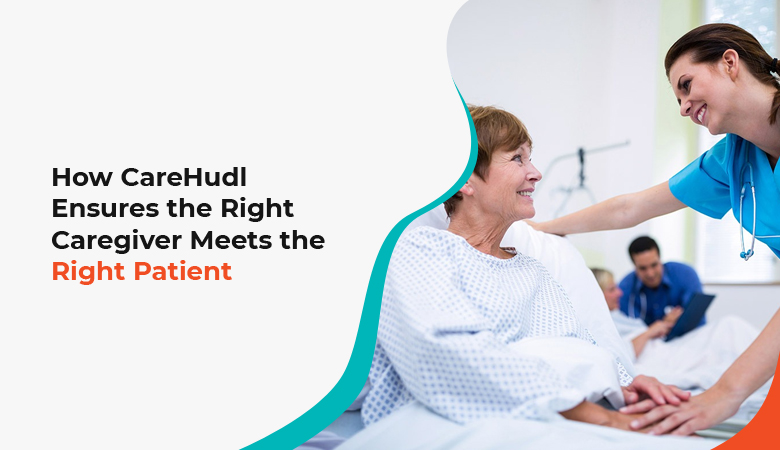
How CareHudl Ensures the Right Caregiver Meets the Right Patient

Sofia is a 78-year-old patient recovering from a bypass surgery, who requires regular visits from a caregiver who knows her condition well and how to treat it; she arrives on time and stays until all is well.

Steve, a professional caregiver, lives nearby and is ready to start his day.

This is where Carehudl clocks in. It ensures that Sophia, who is the patient here, always gets the care that she needs.

Challenge: One Patient, Many Variables.

In traditional Home HealthCare:

  1. Caregivers travel long distances, which results in inefficiency
  2. Some visits start late or are even missed
  3. Patients like Sophia feel neglected, frustrated, and uncertain.

Carehudl is designed to understand severity. That’s why the entire mission is built around the right connections between caregivers and patients, smartly, swiftly, and consistently.

How Carehudl Makes the Right Match?

1 . Understanding Patient Needs

Carehudl starts by analyzing what matters most:

What’s the current situation

What kind of care does the patient need? What skills are required? Are there any special needs involved?

The patient’s context is more meaningful and is more than data.

2. Real-Time Caregiver Insight

Rather than assuming who’s or might be free, Carehudl pulls real-time data.

It analyses:

  1. Who’s on shift
  2. Who’s nearby
  3. Who has the right training

This means care isn’t scheduled, it’s now optimized.

3. Matching with Intelligence

The heart here is a geo-intelligent – AI-backed engine that finds caregivers who are physically closest to the patient. Matches caregivers with an appropriate skill set that minimizes travel time and delays.

What does this mean for Sophia?

Sophia gets Steve assigned to your appointment., Steve speaks her language and specializes in post-surgical care, and because he lives nearby can easily arrive on time for appointments regardless of weather or traffic conditions.

4. Real-Time Adjustments

As we know, life barely goes according to plan.

If there are any changes in the caregiver’s plan, or they face any emergency, Carehudl doesn’t wait for anyone’s approval.

It will,

  1. Instantly look for the best replacement
  2. Sends out notifications via mobile app so everyone is informed
  3. Uses real-time GPS to reroute available. This is how continuity of care stays integral.

No delays. No confusion.

We already know why this matters…. but here are some pointers on why this is important.

Carehudl isn’t just a software. It’s a promise.

For Patients:

  1. Fewer Late Arrivals
  2. Personalized Caregiver Matches
  3. Reliability that builds trust

For Caregivers:

  1. Fair Opportunities
  2. More meaningful visits
  3. Less burnout and travel fatigue

For Team:

  1. Better Compliance and Control
  2. Clear Communication
  3. Efficient Analytics and Report

This strengthens the relationship between the patient and caregiver.

It gets Better for Sophia and Steve.

Toward the end of that week, Sophia gets another caregiver who also understands her care plan.

Steve finishes his week without having to work overtime.

All thanks to the system built around intelligent matching and deep understanding of what quality care really is.

When the right Caregiver meets the right Patient, everyone wins.

Carehudl ensures that.

The right caregivers are matched based on skill and requirement.

The right caregiver arrives on time.

The right caregivers stay engaged throughout the visits.

It is a smart delivery framework.

Every moment is crucial, and Carehudl ensures that it is not wasted. 

We know that when care matters the most, a right management system does wonders. 

Categories
Blog

Top Benefits of Automated Workforce Scheduling for Home Care Agencies

Rethinking Home Care Scheduling in a Mobile-First World

In-home healthcare is growing rapidly across the United States — but so are the challenges of managing a distributed workforce. Agencies often juggle hundreds of caregivers, unpredictable shifts, and time-sensitive visits. Traditional scheduling methods like spreadsheets or phone calls are simply not built for that complexity.

That’s where automated workforce scheduling comes in. By combining AI, real-time tracking, geo-intelligence and mobile-first tools, home care agencies can finally eliminate the chaos of manual coordination and focus on what matters most — quality patient care.

1. Streamlined Scheduling, Fewer Errors

Manual scheduling is prone to mistakes, double bookings, missed shifts, or wrong patient assignments.

Geo-intelligent systems like CareHudl by GigFlex streamline this process by using automated AI- enhanced algorithms that match caregivers to patients based on skills, location, and availability.

The result? Faster scheduling, fewer errors, and a more balanced workload across your staff.

2. Improved Caregiver Satisfaction

Overworked or misinformed caregivers are more likely to burn out — or quit. With real-time shift visibility and mobile notifications, caregivers stay informed, empowered, and confident about their schedules.

When staff can manage shifts through their smartphones, they gain flexibility and trust in the system. In turn, agencies benefit from higher retention and better performance.

3. Better Patient Outcomes

Every delay or scheduling conflict directly affects patient experience. Geo-intelligent workforce scheduling automation ensures that the right caregiver reaches the right home at the right time — without last-minute confusion.

CareHudl’s patented geo-intelligent features allow administrators to track routes, monitor progress, and make real-time adjustments, ensuring timely visits and continuity of care.

4. Real-Time Insights and Reporting

Data-driven insights are critical for managing workforce performance. With GigFlex’s unified dashboard, agencies can monitor attendance, track service delivery times, and identify bottlenecks before they escalate.

These analytics not only improve operational efficiency but also help meet compliance and reporting standards effortlessly.

5. Reduced No-Shows and Missed Visits

Last-minute cancellations are a nightmare for care coordinators. Automated geo-intelligent scheduling tools minimize these disruptions with instant alerts, optimized rescheduling,

automated alerts, and real-time caregiver availability tracking.

That means patients receive uninterrupted care — and your agency maintains its reliability and reputation.

6. Seamless Multi-Location Management

For agencies managing teams across multiple regions or branches, intelligent automation makes central control simple.

Through GigFlex’s Geo-Intelligent Scheduling™, managers can view live workforce locations, track travel times, and coordinate shifts across multiple sites — all within one secure platform.

Why GigFlex’s CareHudl Leads the Way

CareHudl by GigFlex isn’t just another scheduling tool — it’s a comprehensive workforce management platform built specifically for home care environments. From compliance-ready reporting to two-way caregiver communication, it brings clarity, speed, and flexibility to agencies that can’t afford downtime.

Explore other GigFlex solutions:

StaffWorks

 – for security workforce scheduling

EventWorks

 – for large-scale event and volunteer management

Final Thoughts

Automated workforce scheduling isn’t just about convenience — it’s about redefining reliability in home healthcare. With AI-enhanced geo-intelligent automation tools like CareHudl by GigFlex,

agencies gain full visibility, better staff coordination, and stronger patient trust — all while saving valuable time and resources.

Categories
Blog

5 Common Scheduling Mistakes in Home Healthcare (And How to Avoid Them)

Introduction

Have you ever made a schedule at the beginning of the day to get everything organized and then have it all fall apart by lunchtime due to missed calls or unforeseen patient requests or a weary caregiver texting to say they are sick? These are very frequent moments in home healthcare.

At the back of each calendar note is a human being: a caregiver who struggles to combine work and family, an elderly who needs someone to talk to, or a coordinator who is doing everything possible to get it all together.

Let’s unpack how avoiding five surprisingly common scheduling mistakes can bring more ease, satisfaction, and connection to everyone involved.


1. Preventing Double-Bookings and Overlaps

Imagine this, Maria has a long shift but she notices that she is somehow booked for two visits at the same time tomorrow. She is tired and the last thing she wants is another scheduling headache.

Such a situation occurs frequently when agencies use sticky notes or old spreadsheets. The stress and disturbance of both caregivers and clients who are dependent on getting care on time is caused by double-booking.

These errors can be immediately reduced by investing in convenient scheduling software (such as those mentioned by innovators in the industry). Reminder tools, conflict notifications, and at-a-glance calendars will get everyone on the same page—even in hectic life.

Key takeaway: A clear, digital system makes it easier for everyone to show up—on time, every time.


2. Listening to Preferences and Wellbeing

Caregiving isn’t a one-size-fits-all job. Each person’s energy levels, family commitments, and personal boundaries are unique. Sometimes, the only thing standing between burnout and a balanced week for staff is a listening ear.

When schedules are built without checking preferences—like preferred days off or capacity for back-to-back shifts—burnout sneaks in. Imagine if Maria could easily block out time for her child’s school recital or signal when she needs a lighter week.

Modern agencies using accessible self-scheduling systems let staff communicate these needs easily, making them feel heard and valued.

Key takeaway: Respecting staff preferences isn’t just nice—it’s essential for job satisfaction and quality care.


3. Communicating Schedule Changes with Care

We’ve all experienced last-minute surprises. Maybe the Tuesday visit needs to move—or a new patient needs urgent attention. The difference between confusion and a smooth handoff often comes down to how (and how fast) the news gets communicated.

Trust is built when coordinators deliver updates clearly and promptly. The best scheduling tools include text alerts and central dashboards, meaning everyone finds out about changes in real-time—without endless phone chains or missed messages.

Key takeaway: Quick, transparent communication makes a world of difference for trust and reliability.


4. Staying Flexible as Needs Shift

Change is the only constant in home healthcare: flu outbreaks, holiday booms, unexpected discharges. A strict plan causes everybody to rush, whereas a loose plan lets your team improvise without being overwhelmed.

Imagine if, in the face of last-minute demand, support staff could be auto-notified or float pools mobilized with a click. Strong scheduling applications assist organizers in making changes in real time, so that clients do not have to wait and employees are not overworked.

Key takeaway: Responsive scheduling leads to better care and less stress for all.


5. Bringing Order (and Heart) to Scheduling

Dealing with endless paperwork or scattered systems can feel soul-crushing—for both office teams and caregivers. When there’s one streamlined path from initial request through to schedule confirmation, everyone can focus less on logistics and more on care.

Automating repetitive tasks and standardizing approvals means less burnout for coordinators too. In the happy hum of a well-run schedule, caregivers and clients feel the benefits: visits go smoothly, morale goes up, and a sense of community builds.

Key takeaway: A well-organized, caring system supports everyone—removing friction and making good care the norm.


Why These Fixes Matter

Every shift on a home healthcare schedule represents a meaningful moment in someone’s life. When teams move beyond mere logistics to nurture trust and wellbeing, the impact reaches far beyond the calendar.

Happy caregivers provide better care, patients feel safer and seen, and agencies grow through reputation and referrals. The heart of great home healthcare is not just in the plan—it’s in the people behind it.


Topics for Connection and Clarity

  • The ripple effect of missed or late visits on real families
  • Caregiver stories: Balancing work, family, and compassion in the everyday
  • Simple tutorials: Using user-friendly scheduling apps
  • Real-world examples of agencies who boosted morale with better scheduling
  • Insights for managers: Building a culture of listening and support

Final Thought

Home healthcare is ultimately about relationships—between caregivers, coordinators, and the people who depend on them. By humanizing scheduling, agencies ensure that every calendar change is a chance to show care, respect, and flexibility. And that, in the end, is the real heart of home healthcare today.